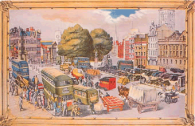
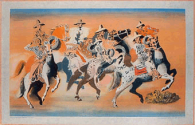
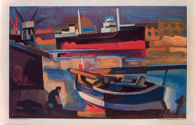
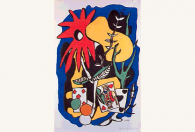
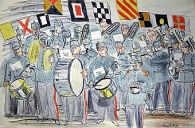
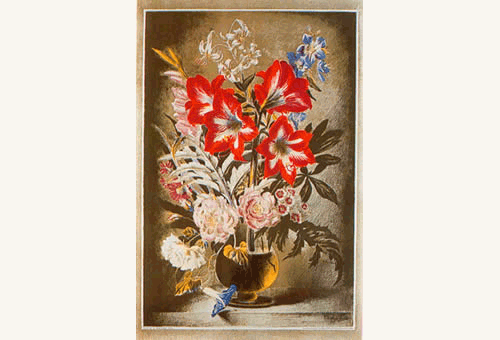
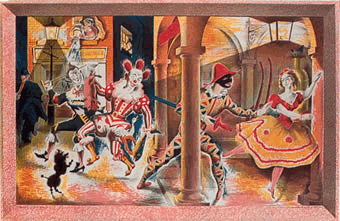
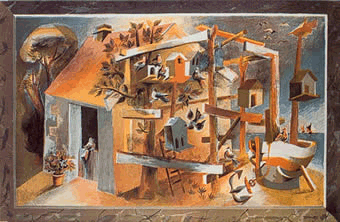
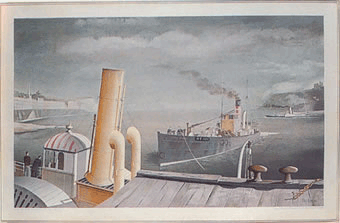
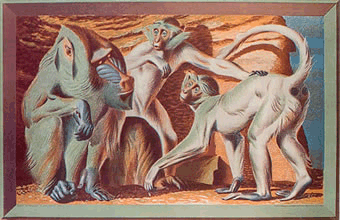
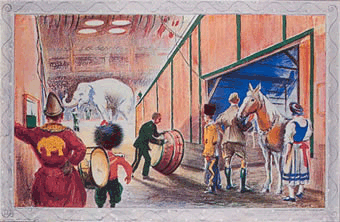
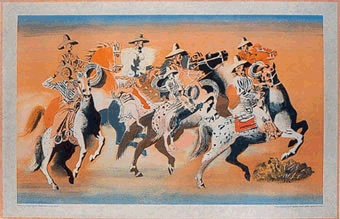
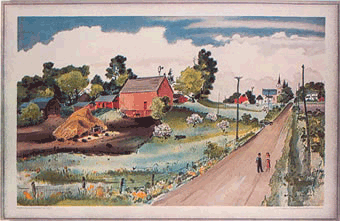
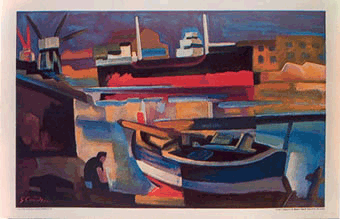
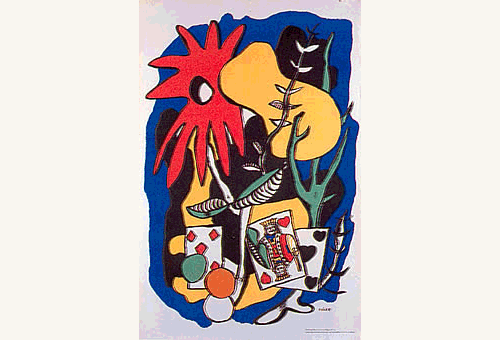
School Prints, published in the 1940s, are now recognised as a
high water mark of the post-war artistic exuberance and optimism
that culminated in the Festival of Britain. Now fifty years on,
it is remarkable to find surviving original stock of these splendid
prints. The prints are small poster size (497 x 860mm), original
hand-drawn colour lithographs printed by the specialist lithographic
printers, The Baynard Press.
"The School Prints" - Mel Gooding
from Arts Review July 1980
The idea behind School Prints Ltd was brilliant and simple. Commission
good artists to create original lithographs which would be editioned
in very large numbers and sold cheaply to those schools adventurous
enough to subscribe to the scheme. Thus, would it be possible
for children in school to enjoy a direct and continuous contact
with real works of art. In her introductory letter to artists,
Brenda Rawnsley, whose idea it was, wrote 'We are producing a
series of auto-lithographs, four for each term, for use in schools,
as a means of giving school children an understanding of contemporary
art'. If that somewhat ambitious aim were not to be fulfilled,
the prints would in any case enliven corridor walls and bring
a splash of welcome colour into dull assembly halls. And so they
did. For many of those at school in the austere '40s their first
memory of a genuine work of art will be of a print by one of the
many artists who contributed to the two major series of 1946 and
1947.
The scheme was nurtured by the prevailing atmosphere of post-war
optimism and democratic humanism: the future was what mattered,
and the children in school embodied that future. The artists approached
responded enthusiastically, and an impressive number of them were
prepared to submit sketches to the selection committee enlisted
by the tireless Mrs Rawnsley. It was chaired by Herbert Read,
and it included R.R. Tomlinson, the influential L.C.C. Senior
Inspector of Art. The committee was not afraid to turn down work
by established artists that it considered unsuitable. The records
of its dealings with artists show no evidence of ill-feeling on
their part at the committee's willingness to offer advice on matters
of composition or subject matter. (Brenda Rawnsley still possesses
the brilliant sketch of the Cat and the Fiddle by Michael Ayrton,
which the committee felt would be too frightening as a full-size
lithograph.)
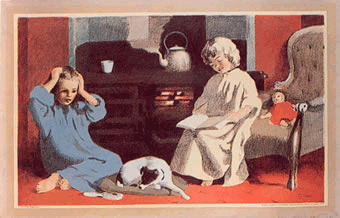
The spirit which pervades the published prints is of quiet celebration:
they picture a world reassuring in its familiarities; a world
of everyday work and occasional festivity. It is a spirit in keeping
with the general optimism of the project. The best of these prints
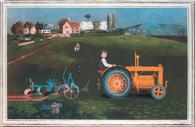
present images of perennial rural and small-town life: they are
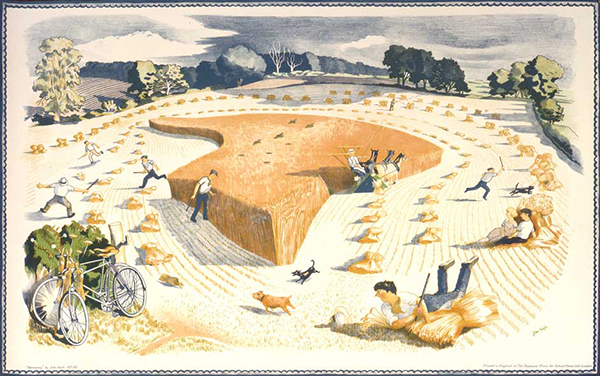
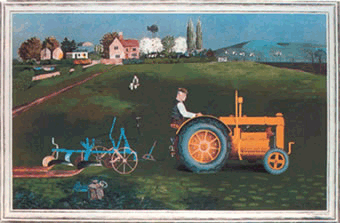
versions of pastoral. Fields are ploughed and harvested (Kenneth
Rowntree, Tractor; John
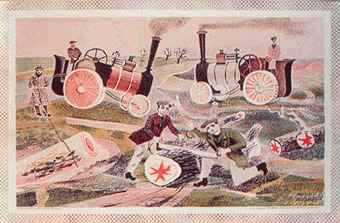
Nash, Harvesting); trees are felled (Michael
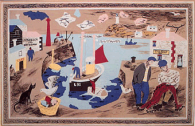
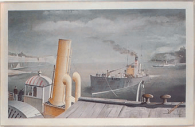
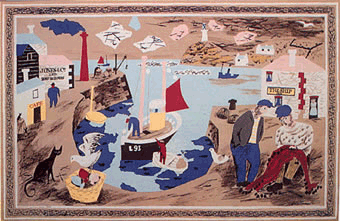
Rothenstein, Timber Felling); nets are mended for the next
fishing (Julian
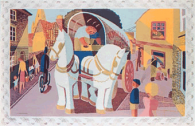
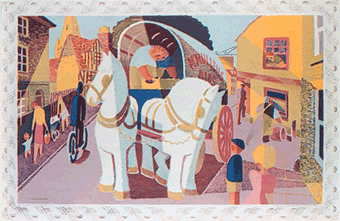
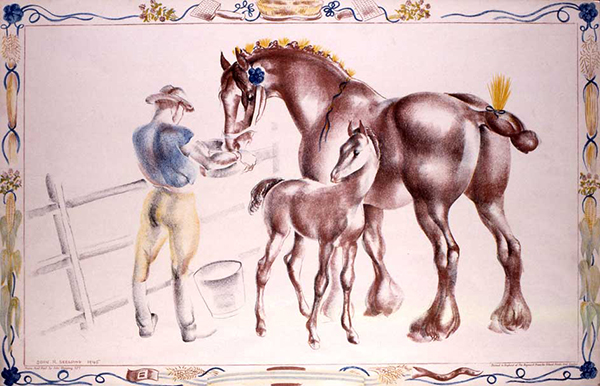
Trevelyan, Harbour); horses are groomed, and deliver beer
to local pubs (John
Skeaping, Mare and Foal; Tom
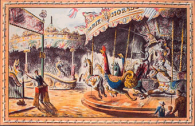
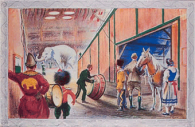
Gentleman, The Grey Horses). For high days and holidays there
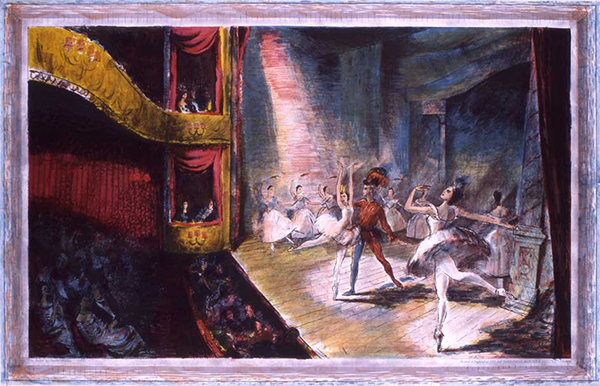
is the circus (Clarke
Hutton, Harlequinade; Russell
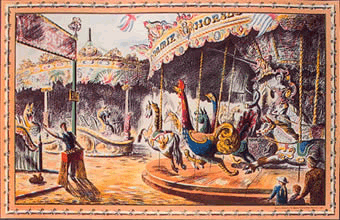
Reeve, The Circus), the fair (Barbara
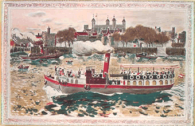
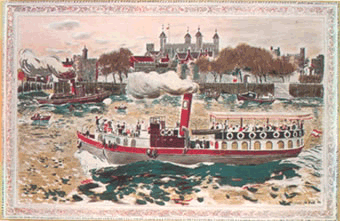
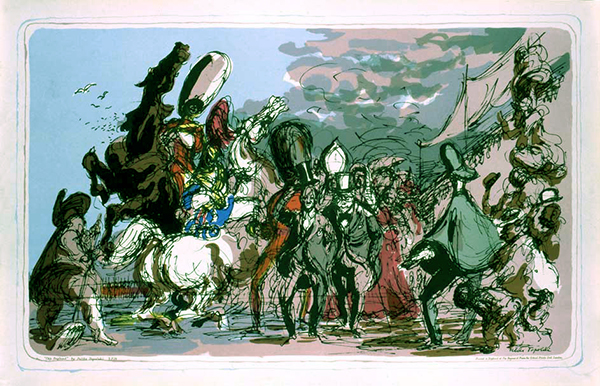
Jones, Fairground) and the outing (Edwin
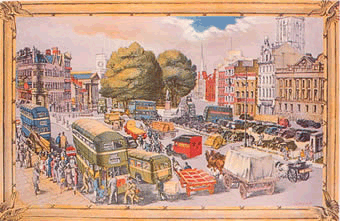
La Dell, Tower of London). Nowhere is there any reference
to the late war and its devastations. Colours are bright and cheerful.
The drawn frame round each picture meant that the print could
be pinned directly to the wall.
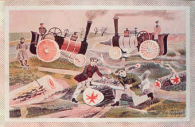
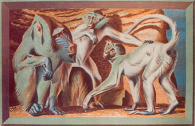
Inevitably, there is a wide variation of quality within the series.
Some have little more than a period charm (which may increase
their interest as nostalgia catches up with the '40s), others
are merely dull; but some have survived remarkably well (including
those mentioned above) and a small number are very good prints
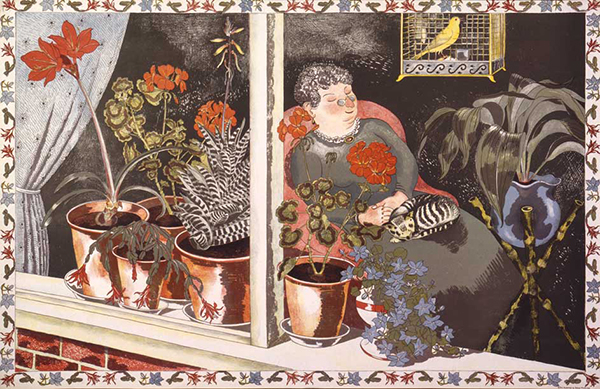
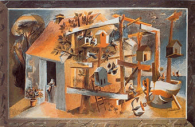
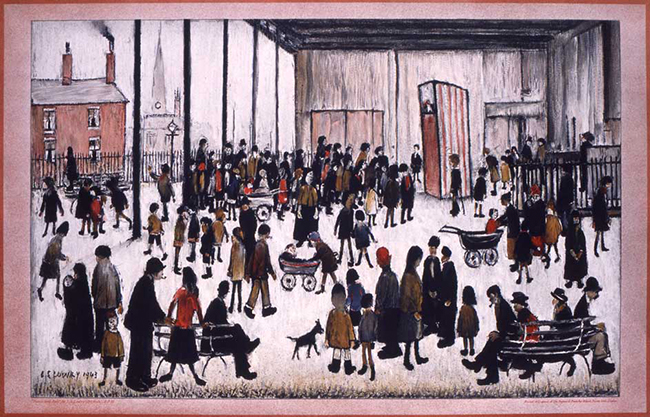
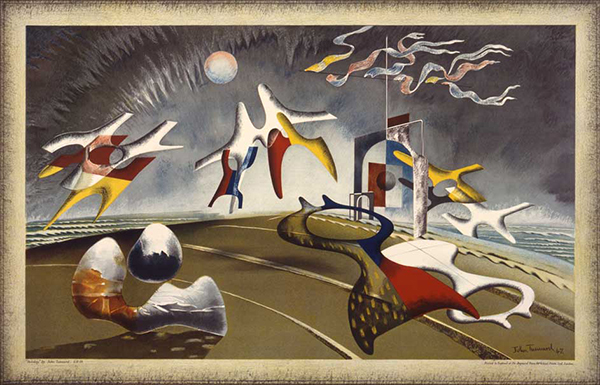
indeed. These latter include works by John Nash [Harvesting,
Window Plants],
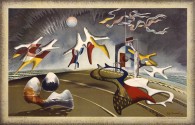
John Tunnard [Holiday],
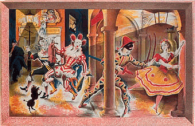
Lowry [Punch
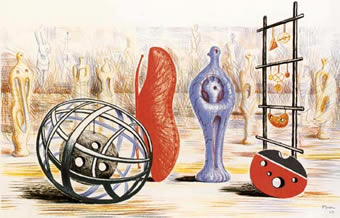
and Judy] and Moore [Sculptural
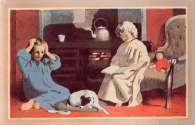
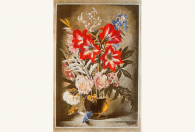
Objects]. In Nash's Window Plants the old lady dozing is engulfed
by the exuberant plants, her heart imaged in the bright red geranium
at her breast, her sleeping cat echoing the striped partridge-breast
cactus on the sill. It is a comically extravagant image, full
of incidental wit and exactly observed detail. Tunnard's Holiday
shows him in his best vein of semi-abstract surrealist fantasy.
This was worked on the stone by the indefatigable Mr Griffiths
at the Baynard Press.
Moore's magisterial Sculptural Objects was drawn by the artist
direct on to plastic plates newly developed by Cowells of Ipswich,
and proofed under his supervision. This print was one of Moore's
earliest graphics and it remains one of his best: powerfully drawn
in primary colours, the objects like strange toys abandoned in
a mysterious space; it is a compelling image.
The sheer logistics of the operation, the costly effort of distribution
to over 4000 schools, finally ended the great adventure of the
School Prints scheme. A further disheartening factor was the expensive
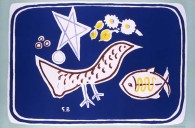
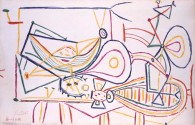
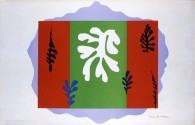
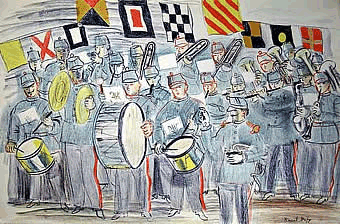
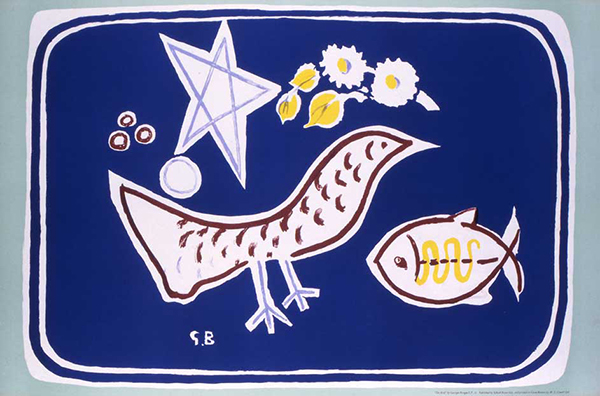
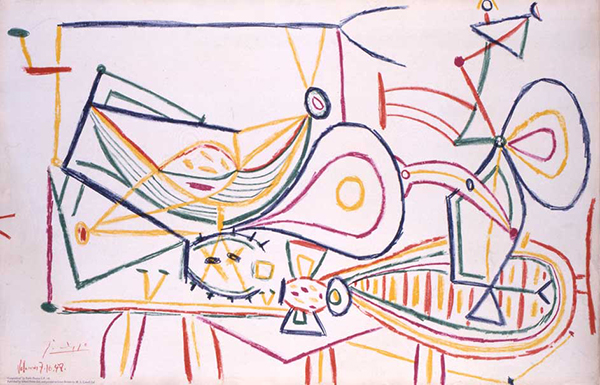
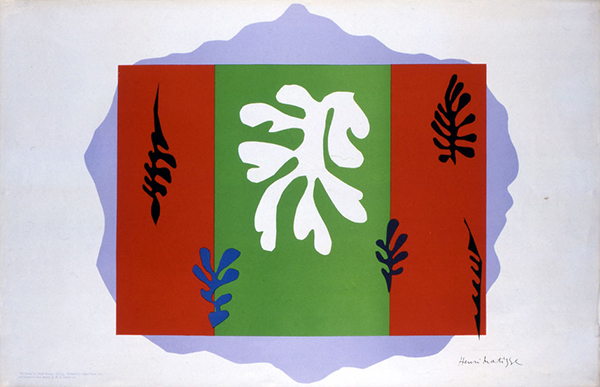
flop in 1949 of the magnificent European series, made possible
by the plastic portable plates, which, in addition to Moore, featured
Matisse, Picasso, Leger, Dufy and Braque.
The now incredible negative reaction of her subscribers to this
spectacularly imaginative enterprise must have put in doubt the
idealistic ambition of the original idea, but it could not detract
from a unique achievement. School Prints put genuine works of
art of real quality into the lives of many children in visually
hard times. There has been nothing like it since.