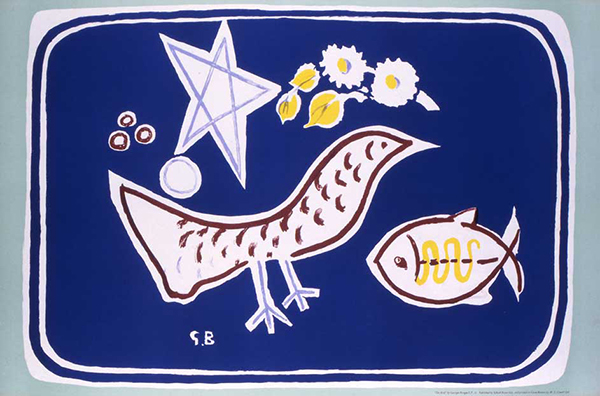
The Bird, Georges Braque
Date
1949
Price
£950
Dimensions
497 × 860mm (19½ × 30 in)
Catalog number
SP27
In stock
Yes
Collection
About The Artist
Georges Braque developed his painting skills while working for his father, a house decorator. He moved to Paris in 1900 to study where he was drawn to the work of the Fauve artists, including Matisse, Derain and Dufy, as well as the late landscapes of Cézanne. Meeting Picasso marked a huge turning point in Braque's development and together they evolved as leaders of Cubism. After a brief interlude in which he was called up to fight in the First World War, Braque's style developed in the direction he was to follow for the rest of his life. In establishing the principle that a work of art should be autonomous and not merely imitate nature, Cubism redefined art in the twentieth century. Braque's large compositions incorporated the Cubist aim of representing the world as seen from a number of different viewpoints.